BOP Hands the Tablet Contract to Securus
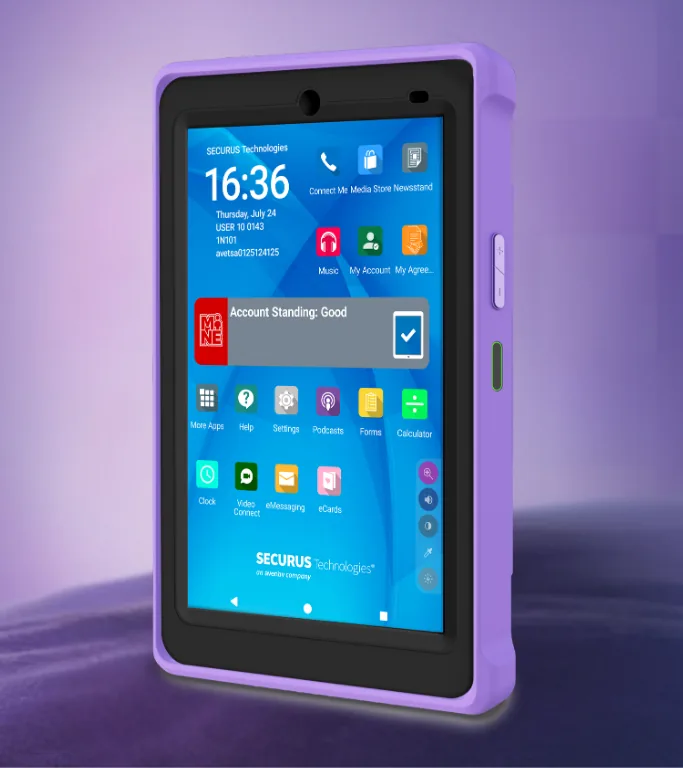
The Federal Bureau of Prisons awarded its inmate tablet contract to Securus Technologies on July 8, 2026. The award notice names Securus Technologies, LLC of Plano, Texas, under identifier 15BPCC26D00000029. That is the replacement for the ATG/Keefe tablets that have been in the system since around 2022.
Those older devices were the Score 7c and Score 7T. Inmates bought them at commissary for about $118 to $120. What they got was paid music, a thin movie rental catalog, and not much else. Messaging, phone, and video were mostly off, or never turned on, even when the marketing said otherwise. ATG is a Keefe Group subsidiary. The same family of companies also sat on pieces of TRULINCS, the MP3 players, and a large share of commissary supply.
An RFP for a full tablet program was already moving in late 2025 and early 2026. The target was about 150,000 people in roughly 115 to 120 institutions. The paperwork still named ATG as the incumbent on TRUFONE, TRULINCS, and related systems.
The new contract is supposed to put a corrections-grade tablet in front of everyone in BOP custody, across about 119 active facilities. The award notice does not name a model. We expect the BOP to get some variation of Securus’s EvoTab 8, the 8-inch inmate tablet the company is selling now. The promised list is long: secure messaging and video with family, literacy and academic work, career and technical training, evidence-based programs, faith materials, health and self-care information, and reentry and job-readiness tools. It is also supposed to take commissary orders, request forms, and program sign-ups off paper.
The structure is a four-year base with three one-year options. The Bureau is not putting appropriated money on it. Securus recoups the cost from what people inside buy: phone calls, music, and other paid content. The vendor supplies the tablets, the wireless cabling and kiosks, the software, and the support.
None of that is live yet. Mid-July announcements said implementation had not started. There is no public timeline. Each phase waits on wireless infrastructure, Securus’s backend, and federal IT rules such as FISMA and FedRAMP in GovCloud. Director William K. Marshall III sold it as staff safety, less paper, and more room for rehabilitation and reentry.
The wind-down is the part nobody has explained. The ATG/Keefe tablets, the MP3 players, and the current messaging and phone systems are supposed to come out. When states have made similar swaps, California from ViaPath to Securus, other systems off Keefe or JPay, people often lost music, photos, messages, videos, games, and leftover balances. Proprietary catalogs do not travel. The BOP has not said how it will handle that.
PERA and other advocates see a wider feature set as a possible improvement. They also flag the usual problems. Families will still pay for calls, messages, and entertainment even if the hardware itself is not sold at commissary. It is not clear whether any of that revenue still lands in inmate trust and welfare accounts the way earlier systems claimed. Plenty of cells have no outlet. Battery life, lockdowns, SHU, and network capacity are not side issues. Education content still has to get through BOP approval. Monitoring is part of the product. Securus already has a long record in other jurisdictions on pricing, commissions, and privacy.
Official BOP copy talks about security, modernization, and reentry. It does not talk about how the old tablets die, or whether anyone keeps what they already paid for. The change sits next to the Bureau’s other technology contracts, including AI monitoring tools. For contract updates, SAM.gov and the Bureau’s own notices are still the place to look.
Sources
- Federal Bureau of Prisons, "Federal Bureau of Prisons Awards Transformational Inmate Tablet Contract to Modernize Communication, Education and Rehabilitation Services," July 8, 2026.
- Correctional News, "Federal Bureau of Prisons Awards Tablet Contract as Part of Broader Modernization Push," July 10, 2026.
- MeriTalk, "BOP Awards Inmate Tablet Contract to Drive Digital Modernization," July 8, 2026.
- Securus Technologies (via Business Wire), "Federal Bureau of Prisons Selects Securus Technologies to Deliver Communications and Digital Infrastructure," July 10, 2026.
- Prison Education and Reform Alliance, "Interactive Tablets? Great! But the Devil Is in the Details," July 11, 2026.
- WIRED, "They Bought Tablets in Prison and Found a Broken Promise," May 6, 2024.
- CalMatters, "Digital tablets mellowed California prisons. Now a tech migration is riling them," March 2026.