The case for pillows: the cheapest fix in the federal prison system
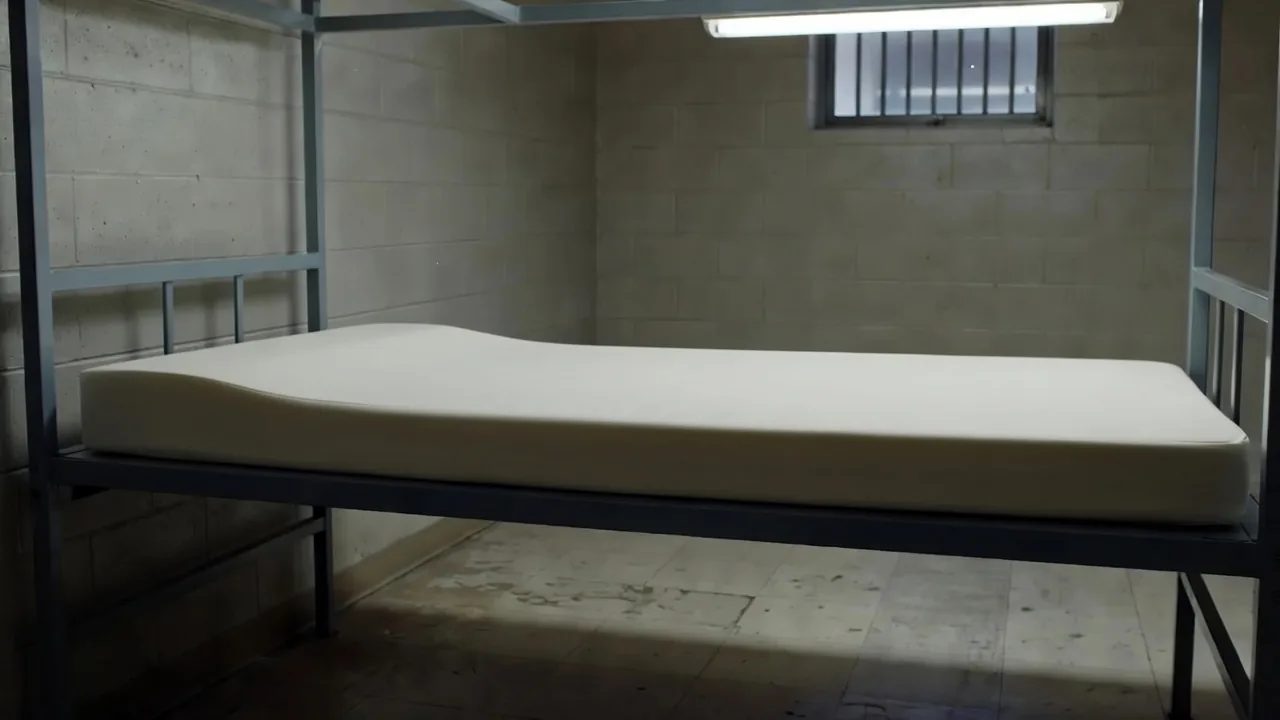
The Federal Bureau of Prisons wrote a pillow into its policy. Every person entering a federal institution is supposed to be issued one, along with a pillowcase, two sheets, a mattress, towels and blankets. What arrives in the cell is a mattress with a pillow molded into one end of it, and the rise is barely an inch above the sleeping surface.
A pillow that does not fill the space between a shoulder and a head is not a pillow. Anyone who sleeps on their side knows the difference within a week, and the Bureau’s own paperwork shows it knows too, since the clause granting it permission to skip the pillow sits right next to the sentence promising one.
The policy says pillow. The mattress says bump.
The current rule is Program Statement 4500.13, the Trust Fund/Deposit Fund Manual dated May 7, 2026. Chapter 13 covers laundry operations, and section 13.2(b)(3) lists what an institution issues: one mattress, two sheets, “One pillow and pillowcase. If not built into the mattress.” Then towels, enough blankets for the climate, and two nylon mesh bags.
That qualifier is doing a lot of work. Program Statement 5270.12, the Special Housing Unit policy, spells out the result for anyone housed in the SHU: “If the institution issues the combination mattress with a pillow incorporated, a separate pillow will not be issued.” The same document carries the bedding promise in the plainest language the Bureau uses, “You will receive a mattress, blankets, a pillow, and linens for sleeping,” which is lifted straight out of 28 CFR 541.31(d), the regulation governing conditions in restrictive housing.
Read those two documents together and the shape of the thing appears. The regulation requires a pillow. The policy statement adds a sentence the regulation does not contain, and that sentence is the escape hatch. The separate pillow disappears the moment the mattress has one built in, and the Bureau buys those mattresses on purpose. The Communications Management Unit policy dated February 26, 2026 states it as a feature: inmates receive “a mattress with a built-in pillow and linens for sleeping.”
What a pillow is for
A pillow holds the head in line with the spine. Side sleeping is the position most people spend the night in, and it opens an angle at the neck that only the pillow closes. Fill the gap and the neck stays straight for eight hours. Fail to fill it and the neck carries the bend until morning, which is why the same geometry shows up in every mattress advertisement and every appointment with a physical therapist.
A one-inch rise at the end of a slab a few inches thick cannot close that gap in any position, and this is not an engineering failure the Bureau is still working on. It is the cheaper object, purchased and issued because the policy language allowed it. The pillow was cut to save money, and the money it saved was small.
The pillows people make instead
People inside do what anyone would do. They cut the mattress open, take the foam, and build a pillow they can sleep on, sometimes a bundle shoved into a shirt or a case, sometimes foam packed into a shape that actually supports a head. The result works, which is why it happens everywhere.
Then a shakedown arrives. A homemade pillow is not government-issued property, so it is contraband, and it goes into the trash along with any other altered item in the cell. The mattress it came out of is already ruined. The next week the same person cuts open the replacement and starts again.
None of that appears in a policy document, but the Bureau’s inventory rules show what happens to the bedding afterward. Section 13.2(a) of the May 2026 manual says each institution keeps an inventory to supply clothing, linen and bedding to the population, and that “if inventory maintained in TRUTRAC is lost due to theft or damage, a TRUTRAC Report of Survey is prepared.” The Bureau has a form for bedding that disappears. It does not publish how many mattresses it replaces in a year, at any institution or nationwide, so the size of the cycle has to be estimated from what it does publish.
What the replacement cycle costs
The Bureau’s commissary rules put a number on the mattress. Section 3.3 of the May 2026 manual approves mattresses for sale to inmates at a maximum selling price of $175, and the same chapter sets the standard commissary markup at cost plus 30 percent. Working back from that cap, the government’s own cost for the unit is roughly $135. Mattresses were also added this year to the list of purchases exempt from the $460 monthly spending limit, which tells you how the Bureau expects people to obtain one.
Now multiply. The Bureau operates 121 institutions. If an average of 10 mattresses per institution are destroyed and replaced each year, the bill runs about $163,000. At 25 per institution it runs about $407,000. Those figures rest on an assumption the Bureau does not publish, so treat them as our arithmetic rather than its accounting, but the unit cost is the Bureau’s own.
A pillow costs $10.50. A correctional supplier’s ACA cotton striped pillow, the standard institutional model with the blue-striped ticking, sells for $126.46 per case of 12, which is $10.54 each. Buying one for every person in Bureau custody comes to roughly $1.6 million, paid once instead of every year. A pillow is not on the Bureau’s approved commissary list at any price. Neither the pillow nor the pillowcase was added when mattresses were.
That omission is the part that does not add up. The Bureau allowed mattresses onto the commissary list and left pillows off it, so the only item a person can buy is the one that gets cut open. Put a pillow on that list and the buyer pays for it out of their own account, not the Bureau’s budget. A manufactured pillow from a discount store beats a bundle of torn-out foam by every measure the person sleeping on it cares about, which means the pillows would sell and the mattresses would stay whole. The Bureau collects the saving, and it costs the Bureau nothing to allow it.
Where the money goes instead
The Bureau’s own budget documents show where the pillow fits in its priorities. In fiscal 2026 it spent $8.37 billion, of which $8.09 billion ran through the Salaries and Expenses account. The fiscal 2027 congressional submission breaks that account down by activity: $4.28 billion for Security/Management and Administration, $3.21 billion for Inmate Care and Programs, and $597 million for contract confinement. The same document asks for $5.58 billion and $3.93 billion in fiscal 2027, out of $10.5 billion total.
Staff pay is where the growth is. The Bureau has used group retention incentives of 10 to 35 percent of salary at hard-to-fill institutions, and the fiscal 2026 strategy published in its budget request raises the ceiling for correctional officers to 50 percent, with psychologists at 25 to 50 percent. The Working Families Tax Cut Act added $1.09 billion to the Bureau’s base in fiscal 2026, money its own budget documents describe as recruitment and retention incentives. The Bureau also wants another $454.7 million to raise salaries for the law enforcement staff who work the institutions.
The same document makes the case for the incentives with a number from Brooklyn: raising the retention incentive at MDC Brooklyn from 10 percent to 35 percent lifted correctional officer staffing from 55 percent to 93 percent. That is real, and it answers a real problem. It also sits in the same budget as a pillow that no longer gets issued, a mattress sale capped at $175, and a population of 153,182 people in Bureau care and custody who are told a bump in the foam is the same thing.
What would fix it
Nothing here requires new money or a new theory. The policy already requires the pillow, and the Bureau is not issuing it because it added a clause about mattresses having one built in.
It could drop the qualifier from the issue list and hand over a pillow and pillowcase with the sheets. It could put a pillow on the commissary list, which is the one lever it has already moved: mattresses went onto approved items and off the spending cap in the same rewrite that left pillows off both lists. At $10.50 a pillow against a $135 mattress, the first pillow sold pays for the damage it prevents, and the person buying it is spending their own money. A replacement cycle that restarts every time a shakedown empties a cell stops being necessary the moment a real pillow is available to buy.
FPC Montgomery’s admission handbook describes the current arrangement without embarrassment: sheets and pillowcases exchange on a schedule, and “Pillows and blankets are exchanged based upon availability at the clothing room.” Availability is doing the work there. The policy promises a pillow, the mattress supplies a suggestion of one, and the difference gets made up by people cutting open the mattress they were issued.
Sources
- Federal Bureau of Prisons, "Program Statement 4500.13, Trust Fund/Deposit Fund Manual," May 7, 2026.
- Federal Bureau of Prisons, "Program Statement 5270.12, Special Housing Units, Change Notice 1," March 6, 2025.
- Electronic Code of Federal Regulations, "28 CFR 541.31, Conditions of confinement in the SHU."
- Federal Bureau of Prisons, "Program Statement 5214.05, Communications Management Units," February 26, 2026.
- U.S. Department of Justice, Justice Management Division, "Federal Prison System FY 2027 Budget Request At A Glance."
- U.S. Department of Justice, Justice Management Division, "Federal Prison System FY 2027 Performance Budget: Congressional Submission."
- Federal Bureau of Prisons, "FPC Montgomery Admission and Orientation Handbook," April 2022.
- The Linen Factory, "ACA Cotton Striped Pillow (Case of 12)."