Twenty-One Thousand Earned an Earlier Move. The Beds Weren't There.
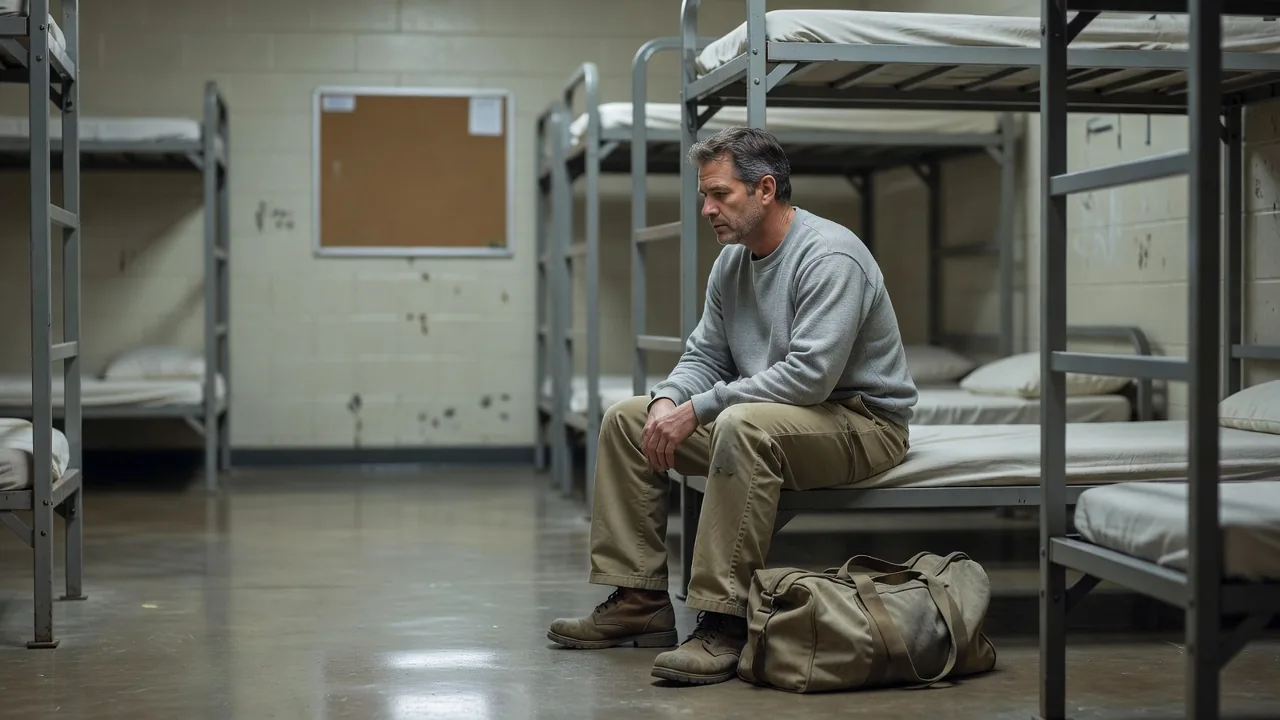
The Government Accountability Office opened its February report on halfway houses with a finding that reads like an admission: the Bureau of Prisons does not know how many people in its prisons have already earned enough First Step Act time credits to move to a halfway house or home confinement and are still locked up.
Then it measured the part it could. Everyone in bureau custody on March 30, 2024 who could have transferred to prerelease custody before the end of that year came to 29,934 people. For 21,190 of them, 71 percent, the Bureau did not apply all the earned time toward the move. Some transferred after the Bureau applied part of their credit, and GAO says those people “could have transferred to prerelease custody sooner.” Others “remained incarcerated in a BOP facility as of December 31, 2024.”
The bureau’s explanations went to detainers, policies that had not been updated to start transfers earlier, staff workload, and a shortage of halfway house and home confinement space. Three of those four describe the agency, not the person serving the sentence.
What Congress actually wrote
Two statutory authorities put a person in a halfway house or on home confinement, and they have different ceilings. The one everyone quotes is the Second Chance Act, at 18 U.S.C. 3624(c). It directs the Bureau to place a prisoner in conditions that prepare them for reentry for a portion of the end of the term, “not to exceed 12 months,” and it limits home confinement under that authority to “the shorter of 10 percent of the term of imprisonment of that prisoner or 6 months.” The First Step Act added a sentence to that same paragraph telling the Bureau to give lower risk, lower need prisoners home confinement “for the maximum amount of time permitted under this paragraph.”
The First Step Act has its own pathway, at 18 U.S.C. 3624(g), and the Second Chance Act ceilings do not apply to it. The statute says so directly: “The time limits under subsections (b) and (c) shall not apply to prerelease custody under this subsection.” What replaces them is the earned credit. A person whose credits equal the remainder of the imposed term, who is assessed at minimum or low risk or has a warden-approved petition, moves into prerelease custody with the rest of the sentence still ahead of them, and 3624(g)(2)(A) requires that a person placed on home confinement that way “shall remain in home confinement until the prisoner has served not less than 85 percent of the prisoner’s imposed term of imprisonment.”
That is the machinery behind the complaint that people spend years on home confinement. Congress wrote it. Earning credits does not shorten the home confinement. It moves the start date forward.
And the same subsection carries a mandate that reads like an afterthought in a paragraph about supervision conditions: “The Director of the Bureau of Prisons shall ensure there is sufficient prerelease custody capacity to accommodate all eligible prisoners.”
91 percent of the beds
GAO counted what the Bureau has. As of September 30, 2024, the Bureau was using 8,169 halfway house beds, which was 91 percent of the beds it had under contract, and 4,495 home confinement spaces, which was 121 percent of the spaces it had under contract. The overage is real rather than a data error: halfway house staff supervise more people on home confinement than their contracts nominally require.
Of the 149 halfway houses under contract that September, 57 were at or above 95 percent of bed capacity and 92 were at or above 95 percent on home confinement. Six in ten of the Bureau’s reentry contractors were effectively full on the piece of the system that is supposed to absorb everyone earning their way out of a cell.
There is no map of where the shortage bites. GAO found the Bureau has not comprehensively assessed how many beds and home confinement spaces it needs, where it needs them, or what they would cost. It relies on census data and a market analysis that GAO described as “limited and not designed to provide a comprehensive understanding of prerelease custody needs.” So the agency cannot say how many people are waiting, cannot say which release districts are short, and cannot tell Congress what closing the gap would cost. The report carries seven recommendations; BOP concurred with all of them, and all seven remain open pending the agency’s 180-day responses.
The rule that only moves one way
The paper governing who goes to a halfway house and when is Program Statement 7310.04, Community Corrections Center Utilization and Transfer Procedures, dated December 16, 1998. Section 9 sets out the math a Community Corrections Manager works with, and it is one sentence long in effect: “The CCM shall adhere to the recommended date, with any adjustment only being downward if budget and/or bed space constraints are a factor.”
Downward. A manager can shorten a placement because the money or the bed is not there. Nothing in the section gives anyone the authority to lengthen one when the person has earned it.
That same 1998 document explains in its own change notice that the reissue “eliminates the possibility of stacking time in a halfway house by combining Bureau referral placement with public law or supervised release placement.” The stacking the Bureau now treats as correct was prohibited by the policy it still operates under. Bureau officials told GAO they have received complaints in districts where halfway houses are consistently full, from people who “only received their First Step Act time credits and no time pursuant to the Second Chance Act.”
The Bureau’s home confinement statement has the same vintage problem. Program Statement 7320.01 dates to September 6, 1995, and its last amendment, Change Notice 2, was issued December 15, 2017, a year before the First Step Act became law. Neither document mentions time credits, because the credits did not exist when they were written.
Section 5 of 7310.04 is worse than stale. It reproduces the statutory authority it was written under, and the language it quotes is the pre-2008 version of 18 U.S.C. 3624(c): “a reasonable part, not to exceed six months, of the last ten per centum of the term to be served.” Congress replaced that text with the Second Chance Act in 2008 and amended it again in 2018. The operating policy for federal halfway house placement still cites the statute as it read before either change.
Where the money goes instead
Halfway houses are cheaper than prison beds, which makes the shortage expensive. GAO reviewed the Bureau’s own cost analysis and found that “living in an RRC or on home confinement is generally less expensive than living in a federal prison,” with the caveat that a specific custody level in a given year can run cheaper than a halfway house. The Bureau’s August time credits rule put a number on the same trade. In its regulatory analysis the Bureau calculated $130.34 a day to hold a person in a facility against $119.73 in a halfway house or on home confinement, and projected total potential savings of $54,130,928 a year from letting credits start at sentencing rather than at arrival.
That is the ledger on one side. On the other, GAO found the agency made roughly 65,000 late payments to contractors, including halfway houses, from fiscal 2022 through March 2025, paying $12.5 million in interest penalties on $2.8 billion in payments. Halfway houses were paid late about 70 percent of the time in fiscal 2023 and 2024. Providers told GAO they had taken private loans to make payroll, and one told GAO that late payments have made some halfway houses reluctant to bid on new Bureau contracts.
Read those two findings together. The agency is not buying beds it says are cheaper than the ones it is using, and its payment record is discouraging the contractors it would need to buy them from. GAO’s recommended fix for the second half of that is a corrective action plan on late payments, which is not a policy question so much as a bookkeeping one.
What the Bureau’s own research says about the risk
The case for moving people out of cells earlier does not rest on the Bureau’s goodwill. It rests on the Bureau’s own studies. During the pandemic, the CARES Act let the Bureau place people on home confinement with more time left on their sentences than its ordinary authorities allowed. By January 2024 the Bureau had made 13,186 of those placements, and its First Step Act annual report says that “based on analysis of more than 13,000 individuals released under the CARES Act since March 2020, only a fraction of one percent has been returned to secure custody due to new criminal conduct.”
Its research office went further. Matching people with a CARES placement against similar people without one, the Bureau found post-release recidivism of 3.7 percent against 5.0 percent. The study has limits the Bureau acknowledges, including that many people could not be matched and the results do not generalize to the whole population. The direction is still the point: the extended home confinement the statute contemplates did not produce worse outcomes in the agency’s own data.
What would change it
Most of the fix GAO identified is administrative, and it is the kind of administrative that only happens when someone is made to do it. The Bureau needs to maintain data on when each person becomes eligible for a halfway house or home confinement, monitor whether transfers happen on time, assess capacity and budget needs, and pay its contractors on schedule. Those are the seven recommendations. None require new legislation.
One does. GAO asked Congress to consider extending the Justice Department’s First Step Act annual reporting requirement, which expired in 2025. Without the report, the committees that wrote the credit system lose their own accounting of it, in a year when the agency cannot say how many people are waiting for a bed.
The rest is political will applied to a statute that already exists. Congress did not leave room for the Bureau to wait until the budget improves. It wrote a capacity mandate into the same section that moves people out of prison, and gave the Director the job of meeting it. When the bed is not there, the credit does not disappear. It converts back into time served in a cell, at the higher daily cost, supervised by staff the Bureau is short of. The person who earned the move pays for the gap, and so does the agency.
Sources
- U.S. Government Accountability Office, "Bureau of Prisons: Actions Needed to Better Achieve Financial and Other Benefits of Moving Individuals to Halfway Houses on Time (GAO-26-107353)," February 11, 2026.
- U.S. Government Accountability Office, "Federal Prisons: Improvements Needed to the System Used to Assess and Mitigate Incarcerated People's Recidivism Risk (GAO-26-107268)," January 27, 2026.
- Legal Information Institute, Cornell Law School, "18 U.S.C. § 3624. Release of a prisoner."
- Federal Bureau of Prisons, "Program Statement 7310.04: Community Corrections Center Utilization and Transfer Procedures," December 16, 1998.
- Federal Bureau of Prisons, "Program Statement 7320.01, Change Notice 2: Home Confinement," December 15, 2017.
- Federal Register, "First Step Act Time Credits—Revisions," August 31, 2026.
- Federal Bureau of Prisons, "First Step Act Annual Report," June 2024.
- Federal Bureau of Prisons, "CARES Act: Analysis of Recidivism," March 2024.