BOP Suspends Its mindSHFT Pouch Deal
Last month we wrote that the BOP had started selling nicotine pouches on commissary and picked an unknown supplier to do it (Nicotine Is Back in the BOP). That supplier is now on pause.
A September 3 internal memo, first reported by CBS News, ordered all BOP institutions to stop procuring mindSHFT pouches until further notice. The Bureau confirmed the pause: “BOP has suspended all additional purchasing of these products until further notice while under review.”
What CBS found backs up everything that looked off about this deal from the start.
SHFT Enterprise Holdings LLC, a Florida company, held an exclusive arrangement to stock pouches in the commissaries of all 118 BOP institutions. The company was incorporated one week after the BOP published a May 15 request for information asking for vendors of “FDA-authorized nicotine pouch products.” The brand it ended up selling, mindSHFT, is not authorized by the FDA. It is not sold commercially anywhere else.
There was no formal request for proposals, and the BOP has no signed contract with the company. Instead, the trust fund chief, Adam Morrow, told institutions in a July 21 memo that pouch sales “has been authorized” and named SHFT as the sole approved vendor. A week later, officials suggested institutions order “three tins per inmate.” There are just over 153,000 people in federal custody. Do that math.
The Bureau paid $6.99 per tin and charged inmates $9.10. The product, one source told CBS, was “selling like hotcakes.”
The pause follows a whistleblower complaint sent this week to Attorney General Todd Blanche and DOJ Inspector General Don Berthiaume by an anonymous federal employee, after CBS began investigating the arrangement. “The Bureau of Prisons is responsible for the health and safety of individuals in its custody,” the complaint said. “If an improperly authorized or contaminated product is being purchased and distributed throughout the federal system, the consequences could be extremely serious.”
The suspension came after the BOP consulted with the FDA. A legal review of the existing inventory is still running, and the BOP says no illnesses or adverse effects have been reported.
Under federal law, nicotine products sold without FDA authorization are considered adulterated. Andrew Goldfarb, a former Justice Department attorney and now a partner at Zuckerman Spaeder, told CBS there “has been no determination by FDA that this product is appropriate for the protection of the public health, which is required before the product can be sold.” He added: “There is no basis to think that FDA, let alone anyone who might use the product, knows what is in it, where any of the ingredients are sourced from, or the conditions in the facility where it was made.”
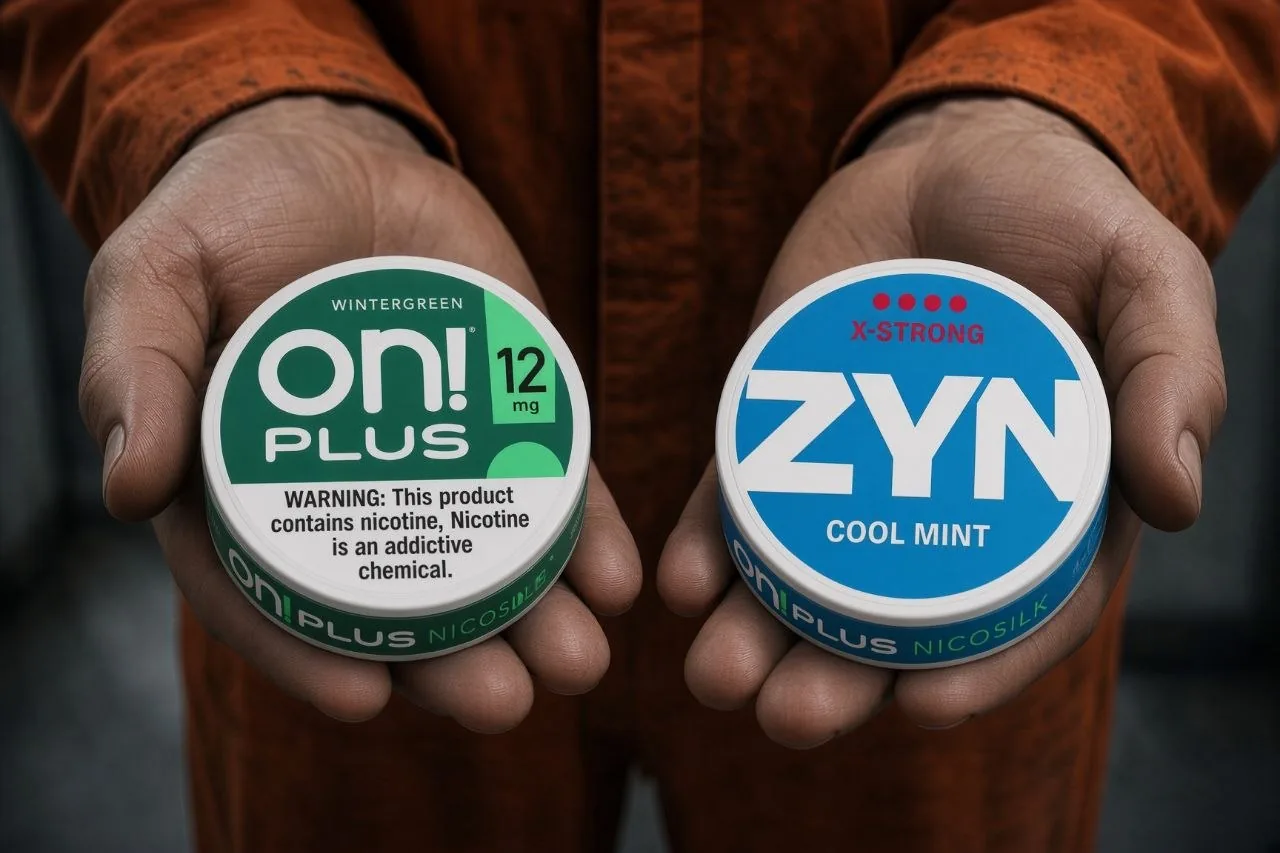
As of last week, exactly two companies hold FDA authorization to sell nicotine pouches in the United States: Swedish Match, a Philip Morris International subsidiary that makes ZYN, and an Altria Group subsidiary that makes on!. That is the entire list. When this rollout started, we figured the Bureau would go with one of the major consumer brands that already carry FDA authorization. Instead it went with a company whose domain name was registered on May 7, whose website promises a trip “From toxic” to “healthy” and “95% less harm,” and whose packaging makes no reference to FDA authorization anywhere.
The corporate trail does not get better. CBS traced SHFT’s listed contacts to Redcon1, a fitness supplement company. Redcon1 was previously led by Aaron Singerman, who served about ten months in federal prison after being convicted of selling unlawful anabolic steroids and other products the FDA had not approved.
Those two authorized brands would have been the better choice even without the legal case. FDA authorization means someone at the agency reviewed the product and its ingredients, and that kind of track record builds trust with the people buying it and with the families sending money in. ZYN and on! also offer real range. The FDA has authorized 20 ZYN products across 10 flavors, including citrus, coffee, cinnamon, and wintergreen, in 3mg and 6mg strengths, plus six on! PLUS products. Federal prisoners spend years picking from the same short commissary list. A program that offers choices in flavor and strength is one people will actually use, and use is what pulls the demand out of the contraband tobacco market. One untested brand at one price point does none of that.
Legal nicotine pouches on commissary are still the right policy. Contraband tobacco funds worse contraband, and a legal alternative takes some of that market away. But the policy only works if the product is one the FDA has actually reviewed. The BOP ran this through its trust fund with no RFP, no contract, and apparently no vendor check. The same solicitation that asked for FDA-authorized products ended up with a vendor that had none.
The memo says “until further notice.” The tins already on commissary shelves are sitting there while the Bureau’s lawyers figure out whether they can be sold.
Sources
- CBS News, "Bureau of Prisons faces scrutiny over startup's exclusive deal to sell non-FDA-authorized nicotine pouches to prisoners," September 4, 2026.
- U.S. Food and Drug Administration, "Nicotine Pouch Products Authorized by the FDA."
- U.S. Food and Drug Administration, "FDA Authorizes 6 Nicotine Pouch Products, Completing Review in Record Time," December 19, 2025.
- U.S. Food and Drug Administration, "Swedish Match USA, Inc. Modified Risk Tobacco Product Applications for ZYN Products."
- Legal Information Services Associates, "SHFTy Business at the BOP," September 11, 2026.
- PPRSUS, "Federal Prisons Suspend Nicotine Pouch Sales Amid Questions Over FDA Authorization," September 5, 2026.